
Working With Your Shadow
Try looking within and reconnecting with yourself through shadow journaling.
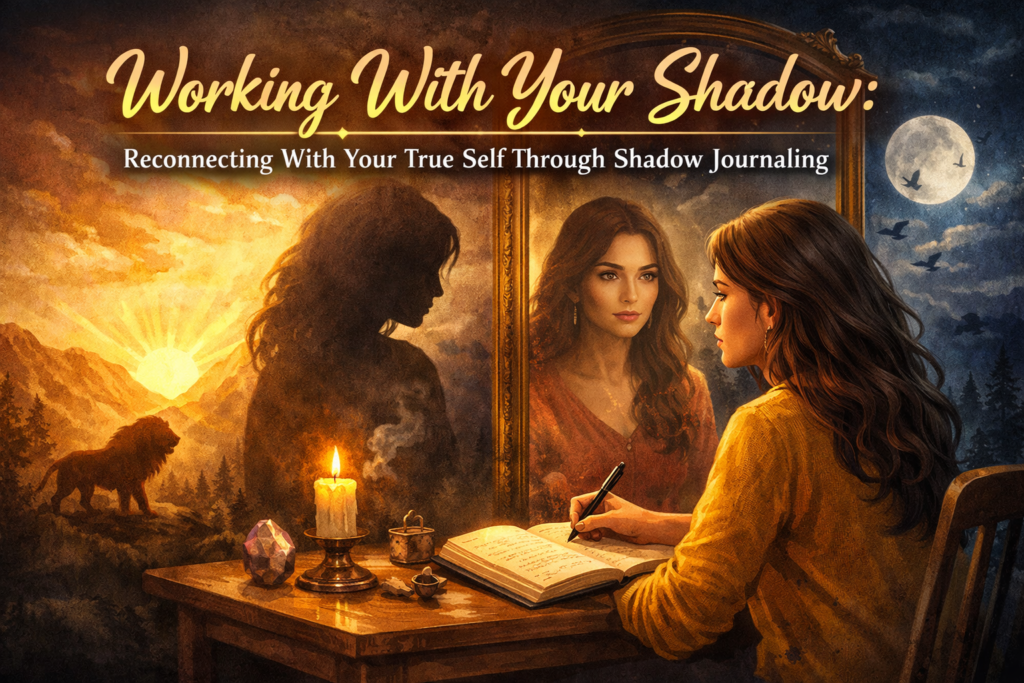
Have you ever looked back and wondered what it was that used to excite you so deeply—something you once loved—but somehow the spark faded, or you started avoiding it altogether?
Let me make it easier to understand with an example.
Think about a colour you once loved wearing. A colour that made you feel confident and happy. Then one day, you realized you had stopped wearing it. You told yourself it didn’t look good on you anymore, and you slowly replaced it with other colours. But why? When did that shift happen?
Did your taste truly change, or did someone make a comment? Did an experience quietly plant a belief in your mind—one you accepted without even realizing it?
To uncover the truth, you need to gather information from your memories and reflect on them honestly. That’s where shadow journaling becomes a powerful tool.
Shadow journaling helps you trace these changes back to their roots, allowing you to understand why certain beliefs formed and whether they still deserve space in your life.
Why Am I Talking About This Now?
Why am I talking about this now? Because I’ll be explaining shadow journaling in detail—but before that, I want to share how it was introduced to me and how I continue to use it to release the limiting beliefs I’ve unknowingly developed over the past 18–19 years.
Let me share an incident from my life.
As the oldest child in the family, I was mostly spoiled by everyone around me. That affection made me a little stubborn, but it also made me feel like a princess—truly the apple of everyone’s eye. Over time, my personality grew into that of a bold, strong-headed, and responsible daughter.
During my teenage years, I was deeply interested in politics. I wrote blogs, participated in debates, and stayed actively involved in extracurricular activities. I received a lot of appreciation for my writing, and I remember how proudly I used to show my diary to everyone after writing about anything at all. Writing wasn’t just a hobby—it was a part of who I was.
Somewhere along the way, I don’t even remember when or how, I forgot about this favorite part of myself.
Years later, after my marriage ended, I picked up a pen and paper again—this time only for gratitude journaling. Slowly, a realization dawned on me: writing had always been my safe place. I had abandoned it without even noticing. When I later discovered shadow journaling, I began to encounter my hidden beliefs and their root causes, and this process has helped me grow and heal in ways I never imagined.
How Beliefs Quietly Shape Us
Let me give you one example.
As the oldest daughter, I was always encouraged to dress “properly”—suit, salwar, and dupatta were the norm in my household. For almost everything, my mother would say, “Do it once you get married.” At the same time, there was constant comparison around beauty standards. To many people, I was too traditional and not beautiful enough; to others, I was the perfect example of a “good daughter”—well dressed in traditional clothes, extremely responsible and strong.
But none of them cared about my other qualities—what I wanted to become, how my teachers saw me, or the potential I carried beyond appearances.
Slowly, this created a belief in me: I won’t look good in western clothes.
Since I got married at the age of 20, I never really had the chance to explore or transform my clothing style. Then I became a mother, gained weight, and started feeling too old to try anything new. I slowly slipped into the identity of a completely depressed and hopeless Indian woman.
When my 15-year-long marriage finally collapsed, I got a chance to step out again—but this time not in India. I was in Germany, and I needed to dress professionally to find a job. That’s when I truly realized what all those years had done to me.
I felt immense hesitation about my dressing sense. But today, I feel completely comfortable wearing anything I like. I confidently flaunt myself in western outfits, and I also proudly wear my favorite cotton kurtas with jeans and sarees whenever I want.
Because through shadow journaling, I realized something powerful:
The problem was never the clothes. The problem was the image I carried of myself all these years.
And I finally understood how that image was shaped—starting from my mother, then reinforced by my matrimonial family, and carried silently within me for decades.
Shadow journaling helped me see it, question it, and release it.
Understanding the Shadow Within
I still carry many beliefs about myself, and I continue to work on them as life brings me face to face with each one. This story was about my journey—though there are many more such examples. If I shared them all, this blog would turn into a mini book. So now, I want to move to the main topic: how you can use shadow journaling for yourself.
Shadow work has become quite popular in recent years, as conversations around self-love and emotional well-being have grown louder and more honest. There is also a lot of material available on the internet today.
Recently, I read a book on shadow work by Keila Shaheen, and it left a deep impact on me. Although I had already been practicing self-reflection for a long time and had made significant progress, this book helped me realize how even the smallest beliefs and subtle shifts in our mindset shape our reality.
Most of the beliefs we hold about our personality and characteristics are not truly ours. There is neurological science behind this—our minds are shaped by repetition, conditioning, and early experiences long before we consciously choose who we want to be.
The Lion Within You
Imagine a lion. He is meant to rule the jungle like a king. But if he is caged in a zoo from childhood, he forgets his true nature. At times, he may lash out at his keepers—not out of cruelty, but frustration. Somewhere deep inside, he remembers who he is, yet he feels powerless to change his situation.
If that lion ever breaks free and runs toward his destiny, the roads fall silent in fear. The same people who once paid to see him caged are now terrified of the free lion.
That is the power we all hold within us.
You don’t have to become the lion.
You simply have to become yourself.
And shadow journaling is one of the tools that can help you remember who you truly are.
Preparing Yourself for Shadow Work Journaling
And this is exactly what you can do with shadow work journaling.
Shadow work journaling is widely used in professional therapeutic settings. And even if you are not ready to seek professional help yet, you can still begin this journey on your own—with honesty, patience, and compassion for yourself.
Shadow journaling is not just writing—it is a sacred ritual. It asks you to go deeper within yourself, beyond the surface of everyday thoughts.
Meditation is the first step of this journey. This is how I personally began.
When you sit quietly with yourself, you may start noticing many thoughts arising—sometimes even intense images or uncomfortable memories from the past. You might visualize worst-case scenarios or relive moments you thought you had forgotten. This is often the first sign that shadow work is calling you.
These experiences are not random or meaningless. They are hidden imprints of past emotions, memories, and experiences that were never fully processed.
We all come into this world with a clean slate—a pure heart and an open mind. Slowly, the people around us begin shaping us into the version they believe we should be. Often, without realizing it, they project their own fears, wounds, and experiences onto us. Over time, we start carrying beliefs that were never truly ours.
The Mirror Meditation Practice
You can begin meditation whenever you feel ready. It doesn’t require waking up early in the morning or sitting before sleep. Choose any time or day when you feel prepared to meet yourself from the inside.
It helps to create a calm, intentional space. You may light a candle or diya nearby. One important element you will need is a mirror—either placed in front of you or by sitting in front of a larger mirror.
Now, sit comfortably and begin to breathe.
Take slow, deep breaths.
Let your reflection appear in the mirror. Gently observe yourself as you are right now. Look into your own eyes during meditation. Do not judge—just witness.
Slowly, an incident or emotion may surface. It could be from your current life or from your past. Let it come. Do not resist it. Do not suppress it. Allow yourself to feel it naturally.
During this meditation, remember: you are just a soul. Your current circumstances, roles, or identity have nothing to do with the body sitting in front of the mirror at this moment.
When you feel complete, stop.
If tears flow, let them.
If anger arises, allow it.
If you feel lightness or joy, welcome that too.
When you are ready, gently open your eyes.
Now look at your reflection again.
This is your shadow.
Observe it closely and ask yourself, honestly:
“Do I want to carry this version of myself for the rest of my life?”
If the answer is no, then congratulations—you are already on the right path.
Beginning the Journaling Process
Open your journal and remind yourself:
This is your sacred space.
Your safest companion.
A place where you are writing a new version of yourself—the version that deserves love, freedom, and the best life has to offer.
Finally, express gratitude to the mirror—for showing you your pain, your truth, and your reality—and for giving you the opportunity to heal and transform it.
Start writing everything you feel—raw, bare, and completely honest. Let the emotions come out in their most natural form. Your hands may tremble. You may cry uncontrollably. You might even judge yourself for feeling this way, calling yourself dramatic or an overthinker.
Write anyway.
This space is not for perfection. It is for truth.
Now, look into the mirror again and gently ask yourself:
“When did this begin?”
You are not here to find someone to blame. You are here to understand the reason. The memory that surfaces may appear connected to a recent incident, but trust this—your reaction is rarely about just the present moment.
Go back slowly.
Maybe it began in your early twenties.
Maybe during college.
Maybe even earlier.
If the answer doesn’t come immediately, give it time. It will surface when you are ready.
A Promise to Yourself
For now, look at yourself and make a promise:
From this moment onward, you will consciously shape your reality with kindness and awareness.
Make a silent promise to that younger version of you—the one who wanted to become something, who longed to be loved, seen, and accepted.
During your day, if similar emotions from the past or childhood arise, don’t ignore them. Note them down. Save a voice note if you are busy. Return to them later when you are ready to sit with yourself again. This time, you will be writing with clarity—because now you know the real cause.
The ball is in your court.
How you change your reality from here is your choice.
Healing Through Compassion
The next time you sit with yourself, visualize how you are going to love yourself through that pain. Wrap your arms around yourself. Hold yourself tightly. Then open your eyes and look into the same mirror.
Speak to the reflection in front of you.
Ask for forgiveness—from the older version of yourself to the younger one who needed you the most but was unknowingly abandoned.
This is how you begin to understand how your reality was shaped—and how you now have the power to reshape it.
You will notice something beautiful: how gently, yet quickly, you start feeling lighter and more at peace.
This is exactly how I began feeling comfortable and beautiful in my own body—confident in every dress I wear, whether Indian or Western. This is how I am today writing this article and trying to share my experience.
And that is the quiet power of shadow journaling.
Things to Keep in Mind During Shadow Journaling
1. Timing Matters:
I highly recommend starting this practice during a full moon or new moon, as these are days when emotions naturally run high. Begin by writing an affirmation about the area you wish to heal. Read it before sleep and immediately after waking—before checking your phone. This helps your subconscious mind accept change and healing.
2. Take It Slow if Needed:
If you are experiencing extreme depression, move gently and consider professional support. If you’re ready to try on your own, pick one small area of your life that needs urgent attention. It could be recurring patterns in relationships, low self-esteem, discomfort with your body, or beliefs about your skin tone. Start small.
3. Honor Your Tools:
Treat your diary and mirror as sacred. Keep your diary completely private and choose a pen specifically for this practice—because that pen is helping you write a new story for yourself.
4. Capture Your Journey:
Click a photo of yourself every day. In 30 days, you will notice yourself feeling more confident, empowered, and radiant. Even on low days, take the photo—it will motivate you and remind you of your progress.
5. Embrace Your Emotions:
Feeling emotional is natural. Whenever you feel low, drink water or juice, step outside for fresh air, and allow yourself to process your feelings without judgment.
6. Celebrate Yourself Daily:
Every day, write something kind about yourself. Note one thing you will do to bring a smile to your face—buy flowers, eat something you love, try new dresses, take a skincare or haircare day, or simply shower and wear your favorite fragrance. Even small acts matter.
7. Dedicate Time to Yourself:
Take 30 minutes every day just for yourself. Cleanse your space with sage, palo santo, or a lit candle/diya. Make this time sacred.
8. Connect Spiritually:
Pray for 2 minutes, asking for guidance and support. Stand in front of your temple or a quiet space with closed eyes, and let this connection center you.
Why This Year Will Help You Most
When the sun rises, it lights every corner of the earth without discrimination. This year, let the sun illuminate your personality fully. Some areas of your life will move forward, while others will reveal hidden shadows. Use these insights to strengthen yourself instead of hiding from them.
Align with the sun’s energy, accept your shadow, and consciously reshape your reality.
You will witness the magic of this process and see how a single year can heal, transform, and renew you. The sun’s energy is a reminder of new beginnings—use it wisely.
My best wishes to all of you. 🌞✨
Keep Shining
Love
Shweta <3
A deeply touching and inspiring piece.
Your words feel honest, gentle, and healing. The way you guide self-love, emotional awareness, and spiritual connection is truly beautiful. Every point reflects care, wisdom, and real understanding of inner struggles. Thank you for sharing something so meaningful and empowering.
Very inspiring and heartfelt.
Your words reflect deep self-awareness and kindness. The message of healing, self-love, and inner strength is beautifully expressed. It truly feels genuine and empowering. 🌞✨
Very helpful , just love it how deeply and clearly you explained this. Very heartfelt and a beautiful piece for self- love ❤. It defines our inner strength and inner struggles beautifully
बहुत सुंदर शब्द